Main Street Runs on Mint Now: Inside the Small-Town Linux Takeover Nobody Saw Coming
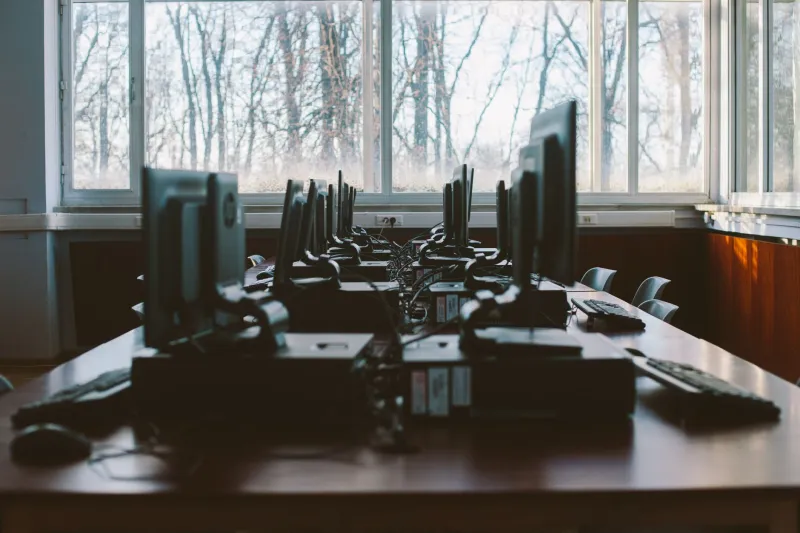
The public computer lab at the Chillicothe Public Library in Ohio doesn't look like a revolution. Six beige desktops, a laser printer older than some of the volunteers, a hand-laminated sign that says PLEASE ASK STAFF ABOUT WIFI. But every one of those machines boots Linux, and nobody in town has complained.
That's the part that surprises people. When whole fleets of computers switch operating systems — especially in places where patrons range from retirees checking stock prices to kids finishing homework — you'd expect chaos. Instead, librarians report the opposite: fewer support calls, fewer pop-up scams, fewer machines grinding to a halt under the weight of some bundled antivirus.
The Math That Starts the Conversation
Small towns don't adopt Linux out of ideology, at least not at first. They adopt it because of arithmetic.
A village office with fifteen workstations faces a real bill when Windows licensing and Microsoft 365 seats come due. In a town where the fire department holds a fish fry to buy turnout gear, that line item matters. When a volunteer suggests an operating system that costs exactly zero dollars — with office software, email, and browsers included — the conversation shifts fast.
The pattern repeats across the country. A water authority in rural Kansas. A township clerk in Pennsylvania. A used bookstore in Vermont running its point-of-sale on a ten-year-old machine that Windows 11 flatly refuses to install on. Nobody's making headlines, but the movement is real, and it's growing one budget cycle at a time.
The Volunteer Army Nobody Hired
Here's what actually makes the migration work: retired sysadmins, high schoolers who dual-booted through middle school, and the guy at the hardware store who's been running Ubuntu since 2008.
These are the people who show up on a Saturday with a flash drive full of installers and a patient explanation for the county clerk who's never right-clicked anything on purpose. They image machines, set up automatic updates, and leave behind laminated cheat sheets. Most of them will tell you they do it because someone once helped them, or because they're tired of watching perfectly good hardware get landfilled.
Open-source communities have always run on this kind of labor. What's new is the venue: not the server room, not the startup office — the library basement and the DMV annex.
What Actually Breaks (Spoiler: Not Much)
Every migration story includes a moment of truth. In small-town America, that moment is usually one of three things:
- A proprietary state portal. Some county systems require Internet Explorer-era websites. The fix is usually a compatibility layer or, more often, the state finally modernizing because enough people complained.
- The one employee's Excel macro from 2011. LibreOffice handles most of it. The rest gets rebuilt, and honestly, it needed rebuilding.
- Printer drivers. Always the printers. Though modern print support has gotten so good that even this is fading as a complaint.
That's the list. No catastrophic failures, no data loss horror stories, no staff revolts. The hardest part of switching, it turns out, isn't technical — it's the first week of muscle memory, when people keep reaching for the Start button in the wrong corner.
Why This Matters Beyond the Budget
There's a deeper thing happening when a town takes control of its own computers. The machines stop being rented infrastructure and start being owned infrastructure. Updates come on the town's schedule. Software decisions get made by the people using them, not a licensing rep in Redmond.
And for the kids in that library? They're growing up seeing that computers aren't a subscription — they're something you can inspect, change, and hand to the next person. In a decade, some of those kids will be the volunteers installing the next fleet.
The revolution isn't loud. It's a laminated sign, a boot screen with a penguin on it, and a town that quietly stopped paying for permission to use its own computers.