Airwaves, Not Cable Bills: The Neighbors Building Their Own Internet
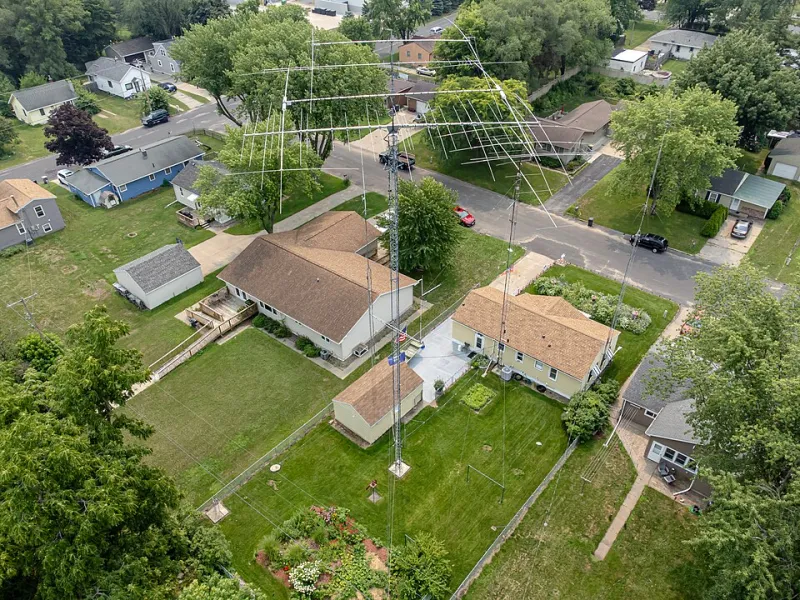
Photo: Wikideas1, CC0, via Wikimedia Commons
When a hurricane knocks out the cell towers and the cable line goes dead, the internet doesn't just disappear for a few hours. It disappears for days. In those gaps, a quiet crew of ham radio operators, neighborhood tech volunteers, and disaster-preppers is building something different: community mesh networks that route around the outage, using open-source firmware and a little elbow grease.
The idea is simple. Instead of every home connecting to a central ISP, each home becomes a node. Nodes talk to each other over radio links. If one path fails, traffic finds another. No monthly bill. No corporate gatekeeper. Just neighbors sharing airwaves.
How Mesh Actually Works
Mesh networking isn't new, but the tooling has gotten better. AREDN—Amateur Radio Emergency Data Network—is one of the most active projects. It runs on commercial Wi-Fi gear that's been flashed with open-source firmware. The radios use amateur radio frequencies and unlicensed spectrum, depending on the setup. Each node has an antenna, a small computer, and a power source. Point one at your neighbor's roof, point another at the library, and you've got a local network.
The bandwidth is modest. You're not streaming 4K video. But you can send messages, share files, check a local emergency page, and make a voice call. AREDN networks have been used in disaster response, community events, and plain old neighborhood chat. The key is that the network is local. It doesn't need the internet to work. It can connect to the internet if a node has a backhaul, but it doesn't depend on one.
The People
In Florida, a retired telecom engineer runs a mesh node from his garage. In California, a library IT volunteer helps neighbors get their radios configured. In Puerto Rico, community groups have used mesh networks to stay connected after storms. These aren't tech billionaires. They're people who've seen the grid fail and decided to build a backup.
'We're not trying to replace Comcast,' one organizer says. 'We're trying to make sure that when Comcast is down, we can still check on each other.'
The Regulatory Hurdles
There are rules. Amateur radio operators can't use their frequencies for commercial traffic, and the FCC prohibits encryption on ham bands—which means mesh traffic over those bands is open. That's a feature for some, a bug for others. Unlicensed spectrum has its own limits: power output, interference, and equipment certification. Zoning boards may have questions about antennas. And then there's the technical stuff: line-of-sight, power, weatherproofing, and the eternal problem of volunteer burnout.
None of these are dealbreakers. They're just friction. The mesh community has gotten good at documenting setups, sharing gear lists, and running training sessions. The AREDN project has a wiki, forums, and a steady stream of firmware updates. Local groups hold 'build days' where people show up with radios and leave with a working node.
What It Costs
A basic node can run a few hundred dollars—a radio, an antenna, a small computer, and cable. That's less than a year of broadband for some households. The bigger cost is time: configuring radios, finding line-of-sight to a neighbor, climbing a ladder, and keeping the thing running through heat, cold, and storms. Groups often pool gear and share the load. A library or community center might host a node. A local business might donate roof space. The network grows one link at a time.
Why It Matters
Digital freedom isn't just about owning your data. It's about owning the wires—or, in this case, the airwaves. When a centralized ISP goes down, a mesh network keeps the neighborhood talking. When a corporation decides a rural area isn't worth upgrading, a mesh network can fill the gap. When a disaster hits, a mesh network can be the difference between rumor and information.
These networks aren't a replacement for fiber. They're a complement. A backup. A community asset. And they're built by people who believe that connectivity is too important to leave entirely in someone else's hands.