Leaving the Cloud Behind: How Everyday Americans Are Running Their Own Internet at Home
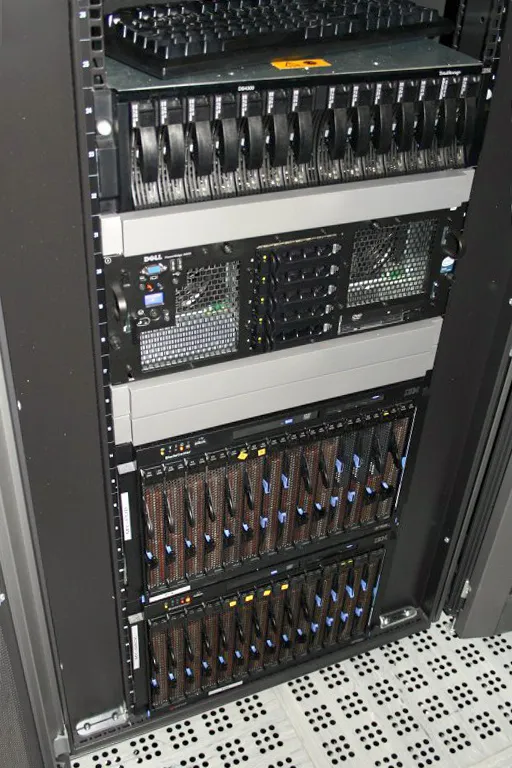
Photo: William Viker, Attribution, via Wikimedia Commons
Somewhere in a suburb outside of Columbus, Ohio, Marcus Webb has a repurposed Dell server humming in his home office closet. On it runs his family's photo library, a private video streaming setup, a password manager, and the project management tool he uses for his freelance design business. He pays no monthly subscription fees for any of it. He owns every byte.
"I did the math one afternoon and nearly fell out of my chair," Marcus told us. "Between Google One, Dropbox, Adobe Creative Cloud, and a couple of other things, I was sending over $3,000 a year into the void. And I didn't actually own anything."
Marcus isn't an outlier anymore. He's part of a swelling wave of Americans who are done renting their digital lives from corporations and are choosing to build something they actually control.
The Economics Are Finally Undeniable
For years, the pitch for cloud services was convenience and cost. Why buy a server when you can pay $10 a month? But that math gets ugly fast when you zoom out. Subscription prices for storage, productivity tools, and SaaS platforms have crept up steadily — and there's no ceiling in sight.
A modest self-hosted setup — a used mini PC or a second-hand rack server from eBay, paired with free and open-source software — can cost a few hundred dollars upfront and run for years on single-digit monthly electricity bills. For small businesses especially, the long-term savings are staggering. A three-person creative agency ditching Adobe, Notion, Slack, and cloud storage could realistically recover their hardware investment within a single quarter.
But it's not just about the money. Not even close.
Privacy Isn't Paranoia Anymore
Remember when worrying about Big Tech reading your files felt like tinfoil-hat territory? That ship has sailed. Between data broker ecosystems, platform terms of service that grant sweeping rights over your content, and the ever-present risk of corporate breaches, the privacy calculus has shifted dramatically.
When your files live on your own hardware — in your home or in a co-location facility you've chosen — the legal and technical exposure looks completely different. There's no corporation to serve a subpoena to. There's no algorithm training on your vacation photos. There's no account suspension wiping out years of work.
For journalists, activists, attorneys, healthcare workers, and really anyone who handles sensitive information, self-hosting isn't just a lifestyle choice. It's increasingly a professional responsibility.
The Tools That Made It Possible
Here's what's changed: the software has caught up. A few years ago, self-hosting meant wrestling with command-line configs and praying to the Linux gods every time something broke. That's still an option — and plenty of people love it — but it's no longer the only option.
Platforms like Nextcloud have evolved into polished, full-featured alternatives to Google Workspace. Jellyfin gives you a personal Netflix without the monthly bill or the content licensing games. Bitwarden can be self-hosted with a single Docker command. Immich handles photo management in a way that genuinely rivals Google Photos. And tools like Portainer and Cosmos Cloud are making container management approachable for people who've never touched a terminal.
The Docker revolution, in particular, has been a game-changer. Being able to spin up a fully configured application in minutes — without touching system dependencies — has dramatically lowered the barrier to entry for non-experts.
Real People, Real Migrations
Take Priya Nair, a licensed therapist in Portland who handles sensitive client records. After a cloud provider's terms-of-service update spooked her compliance consultant, she transitioned her practice's file storage and scheduling system to a co-located server managed through a HIPAA-conscious self-hosting setup. The migration took a weekend and some help from an IT friend. She hasn't looked back.
Or consider the small nonprofit in Atlanta that was hemorrhaging budget on a stack of SaaS tools they barely used. After a volunteer sysadmin introduced them to self-hosted alternatives, they redirected those funds toward their actual mission. Their executive director described it as "finding money we didn't know we had."
These stories aren't exceptional. In communities like r/selfhosted, the HomeLab Discord servers, and local Linux user groups, this kind of migration is becoming a shared rite of passage.
What's Still Hard (And Getting Easier)
Let's be real — self-hosting isn't a magic button. Dynamic IP addresses, port forwarding, SSL certificates, backups, and uptime monitoring are all things you'll need to think about. If your server crashes at 2 a.m., you're the one who gets the alert.
But even these friction points are eroding. Services like Cloudflare Tunnels let you expose your self-hosted services to the internet without wrestling with your router. Tailscale makes secure remote access almost embarrassingly simple. Automated backup solutions like Restic and Duplicati handle the stuff that used to require real expertise.
The community around self-hosting is also genuinely one of the most helpful corners of the internet. Ask a question on the Nextcloud forums or the LinuxServer.io Discord and you'll have three detailed answers before you finish your coffee.
This Is Bigger Than a Hobby
What's happening here isn't just a bunch of tech nerds flexing on Reddit. It's a structural shift in how people think about their relationship with technology. The cloud was sold as freedom — freedom from maintenance, from hardware, from complexity. What a lot of people discovered is that it was actually a different kind of cage, just a more comfortable one.
Running your own infrastructure is a declaration. It says: I understand what I'm using, I control what I've built, and I'm not handing that over to a corporation whose interests don't align with mine.
The hype around cloud computing was real. But the hype around owning your own stack? That's hitting different right now — and the numbers are only going to grow.