The $0 Stack: Designers Who Walked Away From the Creative Cloud
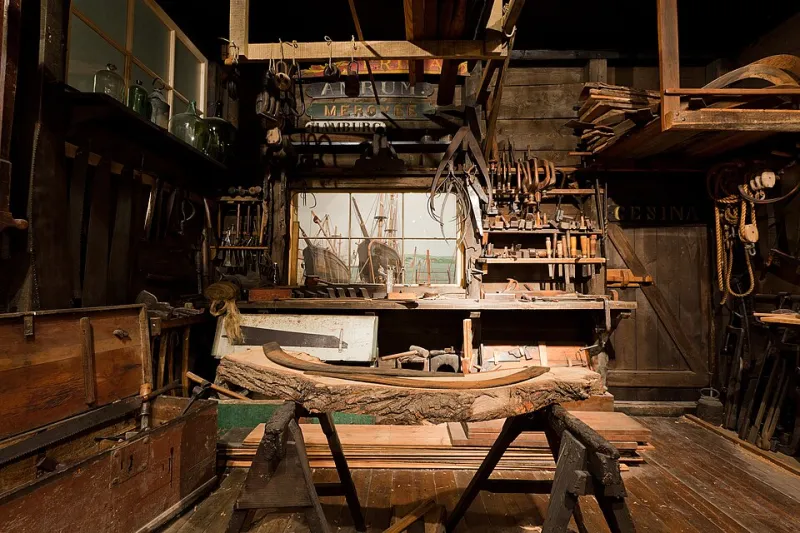
Photo: Christoph Braun, CC0, via Wikimedia Commons
Marisol Vega shoots catalog work for outdoor brands out of a converted garage in Bend, Oregon. Two lights, a rail, a roll of seamless, and a laptop that runs exactly one subscription she can't cancel without losing her archive.
Or ran. She killed it in 2024, after the third price hike in as many years, and spent a miserable month rebuilding a workflow she'd been refining for a decade. "I'm not anti-Adobe," she says, sounding a little like she's still arguing with someone. "I'm anti-renting the tools I make my living with. There's a difference."
The difference is the whole ballgame. Vega can't fix a rented camera, can't repair software that phones home, and can't keep a ten-year-old Mac alive if the app requires an OS three versions newer. That's a right-to-repair problem wearing a subscription invoice.
The stack that actually replaced it
For stills, the answer most working photographers land on is darktable: non-destructive raw development, scene-referred workflow, solid noise profiling, and a color pipeline that will absolutely punish you if you skip calibration. RawTherapee is the other camp — same job, different philosophy, equally free.
Around that core, the pieces are surprisingly complete:
- GIMP for compositing and retouching (version 3 landed in 2025 and finally feels like software from this decade)
- Krita for illustration and paint work, where it's genuinely best-in-class
- Inkscape for vectors, logos, and signage
- Scribus for print layout and PDF export
- Blender for product renders and 3D mockups
- Penpot for UI and brand system work
- Kdenlive and Ardour when a client wants video or a voiceover
Total licensing cost: zero dollars. Total setup cost: one very long weekend.
Color is where hobbyists get burned
Vega's first paid job on the new stack came back from the printer with a green cast in the shadows. She'd been editing blind — a laptop screen, no calibration, no soft proofing.
The fix is the same on any platform, but open tools make you learn it: a hardware colorimeter, ArgyllCMS and DisplayCAL to build a real ICC profile, correct input profiles for each camera body, and soft proofing against the printer's output profile before you export. darktable's scene-referred pipeline handles highlight rolloff more gracefully than most people expect; four years in, Vega says her files look better than they used to.
What she can't do is drag a Pantone swatch. Pantone pulled its libraries out of Adobe's apps back in 2022 and licenses them separately; on open tools you're matching by hand or buying a bridge. For brand-color-critical packaging work, that's a real cost line, not a philosophical one.
Handoff is the real exam
Clients don't ask what software you use. They ask for "the layered PSD."
This is where the open stack gets tested and where a lot of people quietly give up. GIMP opens PSD files, but smart objects, layer effects, and adjustment layers don't survive the round trip intact. Illustrator's native format is a wall Inkscape can't climb. CMYK is the other landmine: Krita handles it, Scribus handles it properly for print, and GIMP remains awkward about it no matter how many tutorials claim otherwise.
The working answer, according to a five-person brand studio in Columbus that made the switch last spring, is to change what you promise. They deliver flattened 16-bit TIFFs plus a PDF/X-4, a properly separated print file, and a layered native file in the open tool's format. One client balked. The rest didn't care once the proofs came back clean.
"Nobody has ever rejected a deliverable because it was made in Krita," the studio's creative director told me. "They reject it because the shadows are muddy. That's on me, not the software."
What breaks and what doesn't
Doesn't break: raw development, retouching, illustration, vector logos, 3D product shots, print PDFs, video edits, color-managed output.
Breaks or annoys: native Adobe file round-tripping, cloud asset syncing, camera-tethered capture on brand-new bodies (gphoto2 lags the firmware curve), a long tail of one-off plugins, and any workflow where a collaborator insists on live co-editing inside someone else's app.
Also gone: generative fill and the AI features now baked into subscription suites. Some shops fill that gap with local open models and ComfyUI; others just, you know, retouch the photo.
The middle path exists
Not everyone needs to be a purist. Affinity's apps went perpetual-purchase (under new ownership), Capture One sells a version you own, and DaVinci Resolve gives away a professional-grade editor for free. There is a whole tier of software between "rent forever" and "compile it yourself," and there's no prize for picking the hardest one.
Then pay for the free software anyway
Here's the part that separates a movement from a freeloading spree: darktable, GIMP, Krita, Inkscape, and Scribus are maintained by small teams and donation-funded foundations. If they're producing your income, send money. File the bug. Write the tutorial. Contribute a lens profile for a camera body nobody's covered.
Vega puts $15 a month into darktable's project coffers and calls it the cheapest line item in her business. "Adobe got $720 a year from me and I never once talked to a human. Now I pay less and I actually know who's building the thing."
That's the trade: less polish, more agency. For a lot of American studios, it's not even close.