Rack It Yourself: Why Americans Are Ditching the Cloud and Building Their Own Tech Infrastructure at Home
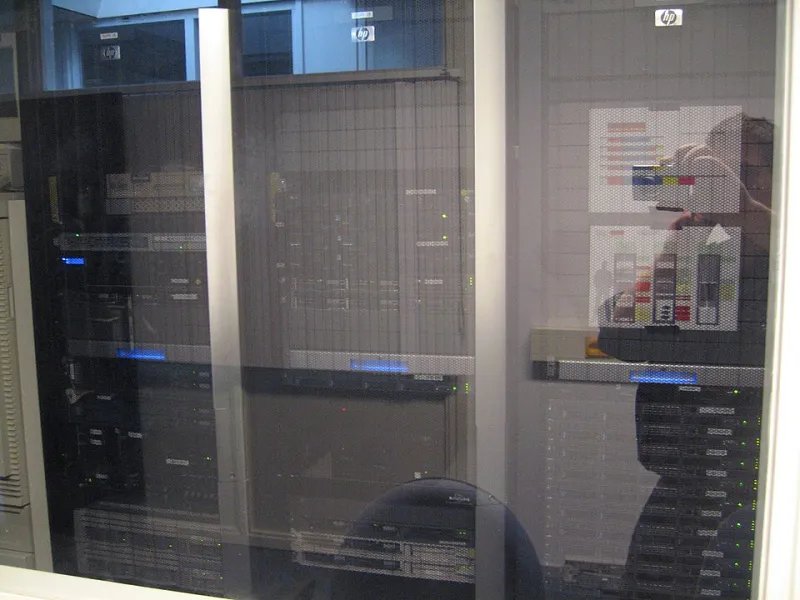
Photo: Jemimus, CC BY 2.0, via Wikimedia Commons
Somewhere in suburban Ohio, a high school teacher named Marcus has a half-rack of refurbished Dell servers humming in his basement. He's running his own email server, a self-hosted media library, a VPN, and a container orchestration setup that would make a mid-sized startup's DevOps team nod with respect. His monthly cloud bill? Zero dollars. His sense of ownership over his own data? Absolute.
Marcus isn't an anomaly anymore. He's part of a fast-growing wave of Americans — hobbyists, professionals, students, and fed-up former cloud subscribers — who are building their own technology stacks from the ground up inside their homes. Call it the home lab revolution. It's loud, it's nerdy, and it's accelerating.
So What Even Is a Home Lab?
At its core, a home lab is exactly what it sounds like: a personal computing environment that you build, own, and operate yourself. But the term covers a massive range of setups. On one end, you've got a Raspberry Pi tucked behind a router running a Pi-hole ad blocker. On the other, you've got a full server rack with redundant storage arrays, enterprise-grade switches, and a hypervisor managing dozens of virtual machines.
What unites all of these setups is intent. Home lab builders aren't just consumers — they're operators. They make decisions about hardware, software, networking, and security that most people outsource to Amazon Web Services or Google Cloud without a second thought. And increasingly, they're doing it not just for the technical thrill, but because they've grown genuinely uncomfortable with the alternative.
The Discontent Driving the Movement
Let's be honest about what's fueling this. It's not just curiosity. It's frustration.
Cloud pricing has become unpredictable. Subscription services keep raising rates. Big Tech platforms have a habit of quietly changing their terms of service, killing features people relied on, or — worst of all — getting breached and exposing years of personal data. For a lot of Americans, the value proposition of handing everything over to a handful of corporate platforms has started to look a lot shakier than it once did.
There's also a growing awareness of what data sovereignty actually means in practice. When your files live on someone else's servers, that company can scan them, train AI models on them, hand them over to law enforcement with a subpoena, or simply lose them in a catastrophic outage. When your data lives on hardware you physically own, in a building where you sleep, those risks shrink dramatically.
Privacy-conscious communities on Reddit's r/homelab and r/selfhosted have ballooned in recent years, with hundreds of thousands of members swapping tips on everything from ZFS storage configurations to setting up Nextcloud as a Google Drive replacement. The conversation has moved well past hobbyist territory — these are people making real, deliberate choices about their digital infrastructure.
The Hardware Playbook
One of the most compelling parts of the home lab scene is how accessible the entry point has become. The enterprise server market's refresh cycles mean that powerful hardware — the kind that ran Fortune 500 companies five years ago — flows into the used market at prices that are genuinely affordable for individuals.
A refurbished Dell PowerEdge or HP ProLiant server can be had for a few hundred dollars on eBay. Old Cisco and Ubiquiti networking gear shows up regularly at prices that make building a serious home network surprisingly attainable. And for builders who want something smaller and quieter, mini PCs from brands like Beelink and Minisforum have carved out a dedicated following among people who want real compute power without the noise and heat of rack-mounted gear.
Storage is another area where home labs shine. Building a NAS (network-attached storage) system using TrueNAS — an open-source storage operating system — gives you the kind of redundancy and data integrity features that enterprises pay serious money for, running on commodity hardware you control entirely.
The Software Stack That Makes It Work
Hardware is only half the equation. What's made the home lab movement genuinely viable as an alternative to commercial cloud services is the maturity of the open-source software ecosystem surrounding it.
Proxmox VE has become the hypervisor of choice for a huge chunk of the community — it's free, it's powerful, and it lets you run virtual machines and containers side by side with a clean web interface. Docker and Kubernetes bring containerization into the home, making it possible to deploy and manage complex application stacks the same way a cloud engineer would.
For specific services, the options are rich. Nextcloud replaces Google Drive and Google Photos. Jellyfin handles media streaming. Vaultwarden runs a self-hosted Bitwarden password manager. Immich is rapidly becoming the go-to self-hosted Google Photos alternative. Gitea or Forgejo covers your code hosting needs. Grafana and Prometheus handle monitoring. The list goes on and on, and almost all of it is free, open-source, and community-maintained.
This is the piece that often surprises people who haven't looked at the space recently: you don't have to sacrifice functionality to go self-hosted. In many cases, the open-source alternatives are genuinely better — more customizable, more private, and not subject to the whims of a product team trying to hit quarterly metrics.
It's Not Just for Techies Anymore
Here's what's really interesting about where the home lab movement is heading: it's broadening. The barrier to entry has dropped enough that people who aren't career engineers are standing up their own infrastructure and making it work.
Projects like Umbrel and CasaOS have built friendly, app-store-style interfaces on top of the underlying technical complexity, letting people who've never touched a command line deploy self-hosted apps with a few clicks. YouTube channels dedicated to home lab tutorials rack up millions of views. Communities are sharing pre-built configuration files, step-by-step guides, and troubleshooting help with a generosity that's genuinely refreshing compared to the cold indifference of a corporate support ticket queue.
The culture of the home lab scene is collaborative in a way that feels distinctly different from the consumer tech world. People are building something together — a parallel infrastructure, a proof of concept that you don't have to depend on Big Tech to have a functional, modern digital life.
The Bigger Picture
Zoom out and the home lab movement starts to look like something more than a hobby trend. It's a quiet, practical form of digital resistance. Every person who moves their files off Google Drive and onto a home NAS, every developer who stops paying for a managed database and runs PostgreSQL on their own hardware, every family that ditches a commercial router for pfSense — they're all making a statement about who gets to own and operate the infrastructure of daily life.
That statement is simple: not everything has to be someone else's service. Some things can just be yours.
The cloud isn't going anywhere, and it's not the enemy. For plenty of use cases, it makes total sense. But the assumption that individuals and small communities can't run their own serious infrastructure? That assumption is getting dismantled, one home rack at a time.
Marcus in Ohio knows it. The thousands of people posting their server room setups on r/homelab know it. And if you've been sitting on the fence wondering whether it's worth the learning curve, the answer from this community is pretty consistent: start small, stay curious, and don't be surprised when you never want to go back.