Mix, Match, Own: How Americans Are Escaping Big Tech's All-or-Nothing Trap

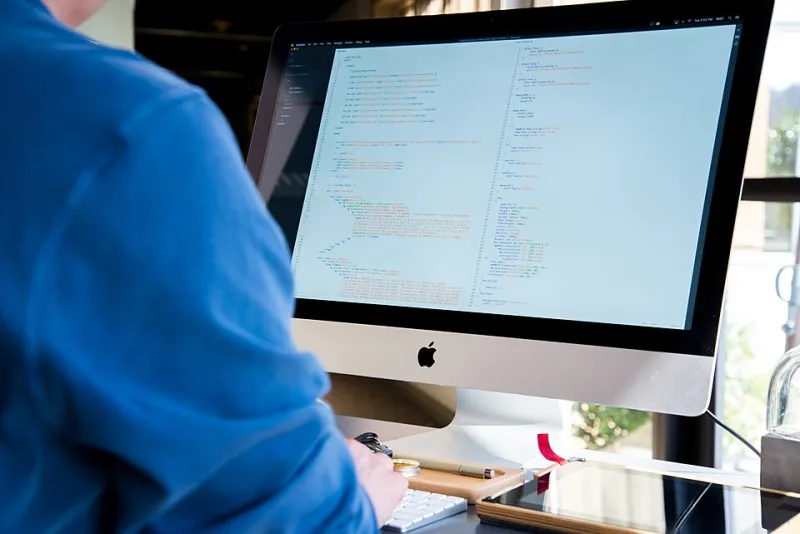
Photo by Photo by Andrey Matveev on Unsplash on Unsplash
There's a deal you make when you buy into a major tech ecosystem. Apple gives you seamless device handoff and a beautiful interface; you give them your payment data, your app choices, and your right to repair. Google hands you a capable Android phone; you hand back a continuous stream of behavioral data that funds one of the most profitable advertising machines in human history. For a long time, most people figured the trade was fair. A lot of Americans are starting to disagree.
Call it the Great Defragmentation. Across the country, developers, hobbyists, privacy advocates, and plain old fed-up consumers are dismantling their dependence on integrated tech empires and replacing them with something more like a toolbox — modular setups built from open hardware, Linux-based operating systems, and interoperable standards that no single company controls. It's messier than buying a MacBook. It's also, according to the people doing it, a fundamentally different relationship with the technology you use every day.
The Problem With "It Just Works"
The pitch for integrated ecosystems has always been convenience. Everything talks to everything. Setup is fast. Support is one phone call away. But that convenience comes bundled with a set of constraints that only become visible when you try to push against them.
Marco Delgado, a software developer in Austin, Texas, hit that wall when he tried to migrate his workflow off iCloud. "I had five years of notes, documents, and project files living in Apple's infrastructure," he says. "When I decided I wanted to move to a self-hosted setup, I realized how deliberately tangled everything was. Exporting data was possible, technically, but it was designed to be painful."
That friction is intentional. Ecosystem lock-in is a business model. When switching costs are high enough, users stay — not because the product is still the best fit, but because leaving feels impossible. Analysts have a term for it: "sticky." The people building these platforms have an incentive to make them as sticky as possible.
For a certain kind of user, that realization is a turning point.
Building a Rig That Belongs to You
The alternative these users are gravitating toward isn't another off-the-shelf solution. It's a philosophy: choose components based on open standards, run software you can inspect and modify, and never let a single vendor become a single point of failure in your digital life.
In practice, that looks different for everyone. Some folks are running Framework laptops — the modular, repairable machines that let you swap out ports, RAM, and storage like PC components — loaded with NixOS or Fedora. Others are building custom desktops from scratch using AMD hardware and open-source firmware like coreboot. A growing number are pairing their Linux machines with de-Googled Android phones running GrapheneOS or CalyxOS, syncing everything through self-hosted services like Nextcloud instead of iCloud or Google Drive.
Jessica Huang, a UX researcher in Portland, assembled her current setup over about eight months. Her daily driver is a Framework 13 running Arch Linux, synced to a home server she built from a used mini PC she picked up for under $200. "I use Syncthing for files, Vaultwarden for passwords, Immich for photos," she says. "Everything I was paying monthly subscriptions for, I now run myself. The upfront time investment was real, but I own all of it now."
The financial math surprises people who assume Linux is just for hardcore nerds willing to trade money for pain. Huang estimates she's saving over $300 a year in eliminated subscriptions, and her hardware costs less to maintain because she's not locked into upgrade cycles dictated by planned obsolescence.
Interoperability as an Act of Resistance
There's a philosophical dimension here that goes beyond personal finance. The modular computing crowd tends to talk about open standards — things like CalDAV for calendars, CardDAV for contacts, IMAP for email, ActivityPub for social networking — as something more than technical specifications. They're a kind of infrastructure for digital self-determination.
When your data lives in a format that any compliant application can read, you're not beholden to any single company's pricing decisions, privacy policies, or product roadmaps. When your operating system is open source, you can verify what it's actually doing on your hardware. When your hardware is repairable and modular, a cracked screen doesn't mean a $1,200 trip to an Apple Store.
"I think about it like renting versus owning a house," says Derek Okafor, a network engineer in Atlanta who runs a fully self-hosted home lab. "When you rent, someone else makes the rules. They can raise the price, change what's allowed, or sell the building out from under you. When you own, you have stability. That's what I wanted from my tech stack."
The analogy resonates with a generation that's watched subscription prices climb, watched features get removed from products they already paid for, and watched companies sell their data to brokers they've never heard of.
The Learning Curve Is Real — and That's Kind of the Point
Nobody in this community pretends the transition is painless. Linux has made enormous strides in usability — gaming on Linux via Proton is legitimately good now, and distros like Pop!_OS and Linux Mint are genuinely accessible to non-developers — but there's still a gap between "plug it in and it works" and "configure it until it works the way you want."
For a lot of the people making this switch, that gap is part of the appeal. Learning how your tools actually function builds a different relationship with them. You stop being a passive consumer and start being someone who understands, modifies, and controls the technology in your life.
"Every time I fix something myself — a broken driver, a misconfigured service — I feel like I understand my machine better," says Huang. "With macOS, it was always a black box. Things worked until they didn't, and then I had no idea why."
That sense of agency is what keeps people in the modular computing world even when it's frustrating. The frustration is productive. It teaches you something.
Where the Movement Is Headed
The tools are getting better fast. Framework's hardware is maturing. NixOS is attracting serious developer interest because its reproducible configuration model is genuinely innovative. The self-hosting community around projects like Nextcloud, Jellyfin, and Home Assistant has grown dramatically in the last few years, producing better documentation and more accessible setup guides.
Big Tech isn't going anywhere, and the integrated ecosystem will keep being the path of least resistance for most people. But for the Americans who've decided that convenience isn't worth the cost — in money, in privacy, in autonomy — the modular alternative is more viable than it's ever been.
You don't have to choose between Apple's garden and Google's data farm. You can build something else entirely. It takes longer. It requires more of you. And according to the people who've done it, that's exactly what makes it worth it.